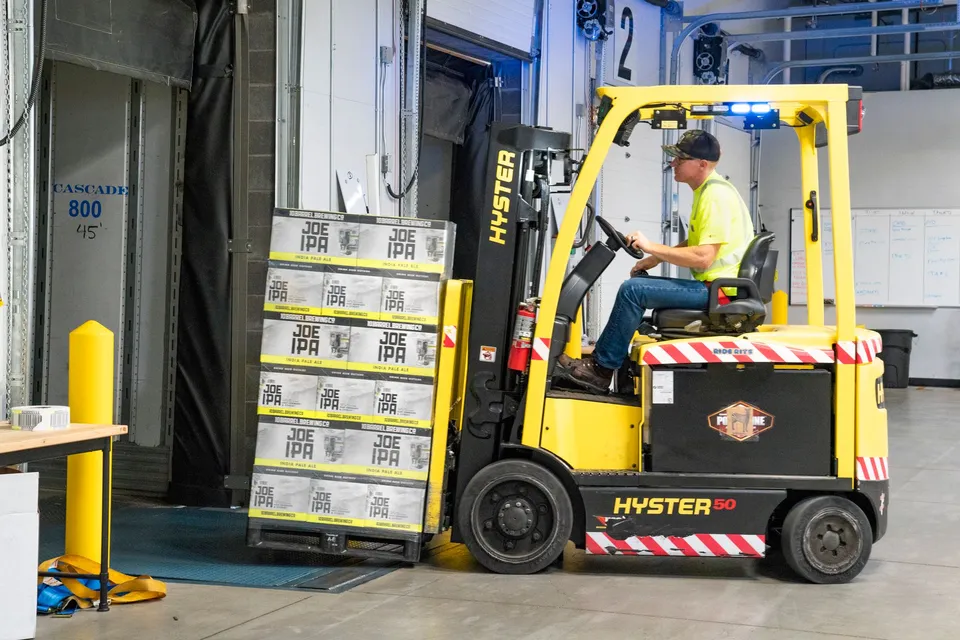
A posting that says “logistics” can hide very different work. One person may spend the day scanning pallets, checking counts, and talking with customers. Another may spend it on the road. In Minnesota’s 2024 Job Vacancy Survey, transportation and material moving accounted for about 7,100 openings statewide, and Greater Minnesota’s vacancy rate was 5.1% versus 3.8% in the metro. Those are survey estimates, not a live list of openings, but they show why employers are tempted to bundle jobs—and why applicants need the real task list, not just the title.
Three roles that often get blurred
A warehouse or dock role is usually about handling goods safely and accurately: receiving, sorting, staging, scanning, and loading. A dispatch or coordination role is about information flow: route changes, customer updates, paperwork, and timing. A driving role adds a legal and physical layer that the others do not have. A good hiring process separates those duties early, because the same applicant may be strong for two of them and unqualified for the third.
That separation matters in manufacturing, agriculture, construction, hospitality supply chains, and resource industries across Minnesota. A person who has worked retail, hospitality, healthcare support, or office services may already know how to communicate clearly, track details, and follow procedures. That experience can transfer well to dispatch or shipping support, but it does not automatically make someone ready to operate a commercial vehicle or meet every route requirement.
Minnesota draws a hard line around driving
Minnesota Driver and Vehicle Services says CDL applicants and holders must self-certify their operating category, and some categories require a current medical examiner’s certificate. School-bus endorsement holders have an additional certificate requirement. In other words, the road job is not just “another logistics task.” It can require a separate legal authorization that loading, inventory, or customer-service experience does not replace.
That is the critical distinction employers sometimes blur when they write “must be able to help in the warehouse and drive as needed.” If driving is part of the job, the posting should say so plainly: what vehicle class, what endorsements, what medical paperwork, and whether the person needs those items before day one or after training. If driving is not part of the job, the posting should say that too. A candidate should not have to guess whether a forklift seat, a yard truck, or a highway route is actually in scope.
Why the difference matters in a tight market
When labor is tighter, employers are under pressure to make one worker cover more ground. That can be smart when the extra tasks are learnable and legally allowed. It is risky when a posting quietly crosses from trainable work into regulated work. An employer can value route knowledge, dock safety, and inventory accuracy without treating a CDL as inherently necessary; the licensing rules create a separate boundary for the driving assignment itself. That is an inference from Minnesota’s CDL requirements, not a claim that every transportation task needs the same credential.
This is especially useful in smaller labor sheds, where the same person may be the best fit for a seasonal yard position, a year-round shipping role, or a delivery job with a much different schedule. In practice, the best candidates are often the ones who understand where the line is. A worker who wants predictable daytime hours may prefer dock or dispatch. A worker with a current CDL and the right medical status may be open to the road. A worker who can only do one of those should be able to tell from the posting.
Questions that make the role clear
If you are an employer, the simplest fix is to separate the job into three questions:
- Is this a loading, dispatch, or driving job?
- If driving is included, what class of CDL, endorsements, and medical certification are required?
- What share of the shift is spent on the dock, in the yard, in the cab, or at a desk?
If you are an applicant, use the same questions in reverse:
- Does the job fit my current license and certification status?
- Which parts of the work am I already ready for, and which parts would need training?
- Am I being asked for a driving credential when the real job is mostly warehouse, scheduling, or customer contact?
Those questions save time on both sides. They also make it easier to compare jobs across industries. A shipping clerk, a dispatch assistant, a delivery driver, and a yard hand may all appear under one broad heading, but the day-to-day work is not the same, the safety rules are not the same, and the credential path is not the same.
Better postings create better matches
A strong Minnesota posting names the worksite, the main tasks, the vehicle requirements, and the schedule. If the role is mostly dock work with occasional vehicle movement, say that. If it is a driving job with some loading, say that. If the work includes customer handoff, routing software, or paperwork, name those skills too. The goal is not to scare people away; it is to help the right people recognize themselves in the role.
For employers, that clarity usually widens the pool instead of shrinking it. A person from retail, hospitality, healthcare support, or office services may be a strong dispatch or shipping candidate even if they have never driven professionally. A person with a CDL may be a better fit for the road than the stockroom. When the description separates those possibilities, the hiring decision gets easier, the onboarding gets cleaner, and the first week is less likely to turn into a mismatch.
For applicants and employers who want to sort out the difference between a dock job and a road job, the next step is a short conversation about duties, schedule, and worksite. Call Express or use grandrapidsmn@expresspros.com for employers and apply@expressprosmn.com for candidates.