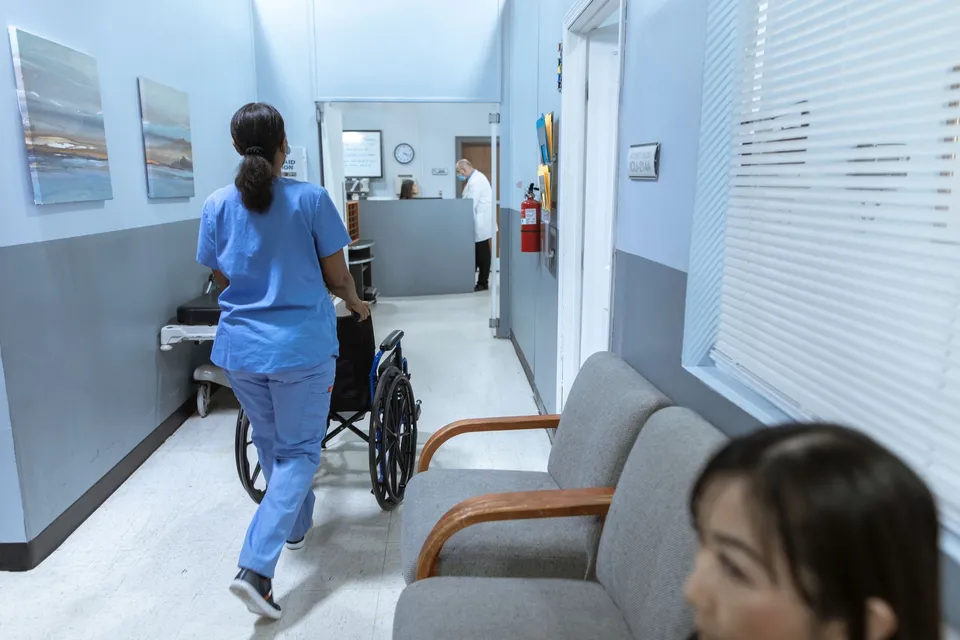
In Minnesota health care, the hardest hiring mistake is not underestimating demand. It is confusing support work with licensed practice. A clinic, nursing home, home-care agency, or hospital can need both kinds of workers at once. In DEED’s 2024 Job Vacancy Survey, healthcare support accounted for about 9,950 statewide openings, and healthcare and social assistance together represented about 31,700 industry openings. The same survey found that 49% of openings required a certificate or license and 44% required at least a year of experience, which means a posting that blurs duties can scare off the right candidate or attract the wrong one.
That distinction matters because Minnesota does not treat all bedside or care-adjacent work the same way. The Minnesota Department of Health says nursing assistants enter the registry through approved training and competency evaluation, the state competency test, or qualifying endorsement from another state. It also says the state-approved nurse-aide curriculum includes at least 75 hours, with at least 16 hours of supervised practical training, and that an out-of-state assistant must appear on the Minnesota Nursing Assistant Registry before working here. Those are concrete boundaries, not hiring preferences.
Practical nursing sits in a different lane. Central Lakes College describes its practical nursing diploma as a 37-credit, one-year program at its Staples campus, with pre-entry requirements that include a Minnesota-approved nursing-assistant course completed within the past five years or current Minnesota Nursing Assistant Registry status. That means support experience can help a person move toward the next step, but it does not itself authorize practical nursing duties. For applicants, the useful question is not, “Have I ever helped people?” It is, “What level of responsibility is this employer asking me to hold on day one?”
For employers, the cleanest job posting separates three things: what the worker will actually do, what must be authorized on the first day, and what can be taught after hire. A strong posting in a nursing facility or clinic does not stop at “patient care” or “resident services.” It names the work, such as assisting with daily care, documenting assigned tasks, communicating changes to a supervisor, and following the facility’s procedures. Then it states whether the employer needs a Minnesota nursing assistant registry status, a practical nursing license, or both. If the role offers training or advancement, say so plainly. If it does not, do not imply a bridge that is not there.
That same habit improves hiring in other Minnesota industries. In manufacturing, introductory instruction may prepare someone for one machine or one process, but it does not prove independent competence on every machine. In transportation, a commercial driver’s role brings separate self-certification and medical requirements that warehouse experience cannot replace. In construction, apprenticeship is a formal written training relationship, not just informal cross-training. The underlying lesson is the same across sectors: an employee can be capable without being authorized, and authorized without being experienced in every task. Employers hire more accurately when they identify which of those matters most.
That clarity helps applicants too. A worker leaving retail, hospitality, or another support role may have strong attendance habits, customer communication skills, and a calm way with people. Those skills matter in health care, office services, logistics, and public-facing work. But when a posting requires a registry status or license, transferable experience is only part of the story. Job seekers should ask whether the employer needs a credential before the first shift, whether training hours are paid, who supervises the work, and whether the role can lead toward a further credential later. Those questions are not signs of hesitation; they are how a candidate avoids building a career on a misunderstanding.
The pay and schedule conversation should be equally specific. A role that begins on evenings, weekends, or split shifts may fit a worker with school hours, caregiving duties, or a second job, but it may also change who can realistically accept the offer. That is one reason a posting should say more than “flexible schedule.” It should say which days are fixed, which shifts rotate, whether overtime is possible, and who covers breaks and relief. In health care especially, a vague posting can hide the real staffing challenge: not whether someone wants to work, but whether the schedule, supervision, and training line up with the duties.
Minnesota’s vacancy data suggest why this precision matters. Healthcare and social assistance remains one of the state’s largest sources of openings, but a large opening count does not mean every opening is interchangeable. A nursing assistant opening, a practical nurse opening, and a clinic support opening may sit in the same industry, yet they demand different credentials, different levels of judgment, and different supervision. Employers that spell out those differences waste less time. Applicants that read them carefully waste less energy.
A practical next step is simple: write or review the job as a sequence of duties, then add the credential, then add the schedule. If you are hiring in the approved Northland territory and want to talk through duties, schedule, and worksite needs, call Express or email grandrapidsmn@expresspros.com. If you are applying, send your skills, availability, and work preferences to apply@expressprosmn.com.