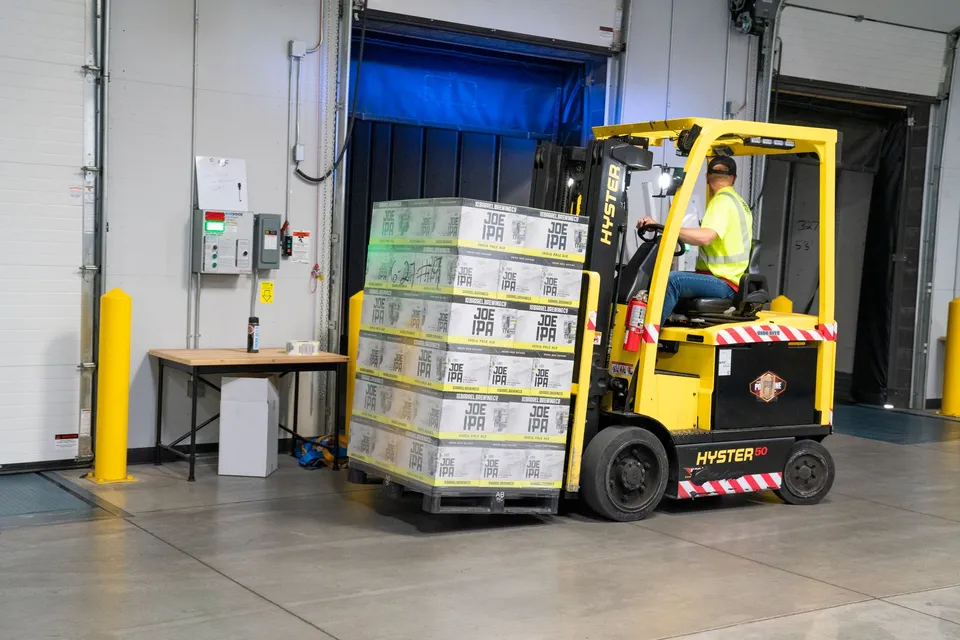
On a Minnesota afternoon shift, the hardest part may not be the task itself. It is the handoff: who can step away, who can cover, and which duties can move without breaking the work. That question shows up in factories, clinics, kitchens, warehouses, construction sites, and office settings whenever a supervisor builds a schedule that has to survive call-offs, breaks, and overtime. It also matters because Minnesota does not treat every minute of a shift the same way. Some time must be paid, some work has legal limits, and some tasks can only be covered by someone with the right authorization, not just the nearest available person.
Start with the work that must be covered
The first mistake in shift planning is assuming that “backup” means “anyone nearby.” In some jobs, the backup only needs training. In others, the backup needs a credential, a registry listing, a medical certificate, or another authorization before the work can legally move to them. A practical example is healthcare support: Minnesota’s nursing assistant registry is not a suggestion, and an out-of-state assistant must appear on the Minnesota registry before working as a nursing assistant here. In transportation, the Department of Public Safety says CDL applicants and holders must self-certify their operating category, and certain categories require a current medical examiner’s certificate; that is a different boundary from general warehouse or loading experience.
That distinction matters across industries. A hospital can cross-train a unit clerk on documentation or phone coverage more easily than it can move licensed clinical duties. A manufacturer can teach a helper to stage parts or record counts, but not every machine task belongs to every worker. A logistics team can train a warehouse employee on inventory flow, but not every route or vehicle assignment can be handed off without the right driver status. A construction crew can share cleanup or material handling, but not every trade task is interchangeable. Employers who sort jobs into “trained,” “authorized,” and “must stay with the original worker” make better backup plans than employers who rely on title alone.
Minnesota break rules change the math
Minnesota’s 2026 break rules make coverage a scheduling issue, not just a courtesy. The Department of Labor and Industry says that, starting January 1, 2026, workers generally must receive at least 30 minutes when they work six or more consecutive hours, and at least 15 minutes within each four consecutive hours worked. A break shorter than 20 minutes counts as paid hours worked, and an unpaid break requires the employee to be completely relieved of duties. Those rules affect how many people a shift really needs, because a “single” opening may actually require one person on the task and another person available to relieve them.
That is true in a line shop, a nursing station, a kitchen, a warehouse, or a front office. If the relief worker is also the person covering phones, stocking supplies, or greeting customers, then one absence can ripple through the whole shift. Good schedules name the coverage point as clearly as the primary job. They also separate a short paid pause from a true meal break, because those are not the same operationally or legally. Minnesota’s work-break rules are worth reading with a supervisor’s eye, not just an employee’s eye.
Pay is only one part of the promise
The pay line matters, but it does not tell the whole story. Minnesota’s state minimum wage became $11.41 an hour on January 1, 2026, and DLI says overtime in Minnesota generally starts after 48 hours in a seven-day workweek, while federal law can require overtime after 40 hours for covered employment. That means a job posting should separate the legal floor, the base rate, shift differentials, and any overtime or premium pay instead of blending them into one vague number. A schedule that looks attractive at 36 hours can feel very different at 52.
The same logic applies to retention. Minnesota’s 2024 Job Vacancy Survey found that 44% of openings required at least a year of experience and 49% required a certificate or license, while the statewide median offered wage was $20.67 across surveyed vacancies. Those are survey estimates, not live offers, but they show how often employers expect some kind of prior proof before day one. When a job also needs a hard-to-cover shift, a rigid attendance pattern, or a specific worksite, the employer is asking candidates to clear more than one barrier at once. In that setting, the most useful question is not “What is the title?” It is “What must be true every time this shift starts?”
The worker’s version of the same problem
Applicants feel coverage problems too. DEED’s CareerForce staff reported that job seekers were running into childcare, transportation, and language barriers, along with hiring delays and digital-literacy problems. That does not mean people do not want work. It means the schedule can decide whether a job is realistic. A 6 a.m. warehouse start, a split hospitality shift, or an evening healthcare-support shift may be perfectly workable on paper and impossible in practice if childcare opens later, the bus does not match the clock, or the household has only one car.
That is why employers should treat flexibility as a design choice, not a slogan. A flexible schedule that still changes without notice is not flexible for the worker. A shift that can be covered only by a supervisor’s memory is not stable for the business. And a job posting that omits relief timing, commute expectations, or who handles breaks is asking applicants to guess at the hidden work of the job.
A simple coverage checklist for Minnesota supervisors
Before posting or approving a shift, ask five questions:
- Which tasks must be done by the original worker, and which can be handed off?
- Which tasks require a credential, registry status, license, or other authorization?
- Who covers breaks, and when does that relief happen?
- How do overtime, shift premiums, and base pay interact when hours change?
- What real-world limits matter here: childcare, transit, travel between worksites, or seasonality?
Those questions are useful in a clinic, a bakery, a truck yard, a machine shop, a county office, or a construction trailer. They keep employers from overpromising and help applicants judge whether a shift fits their life. They also make it easier to explain the job honestly, which is often the fastest way to reduce turnover.
If you are sorting out a schedule, a worksite, or a hiring gap, start with the coverage question before you start with the title. Employers can describe duties, shift patterns, and backup needs; applicants can share skills, availability, and work preferences. For help talking through those pieces in north-central or northeast Minnesota, call Express or email grandrapidsmn@expresspros.com.