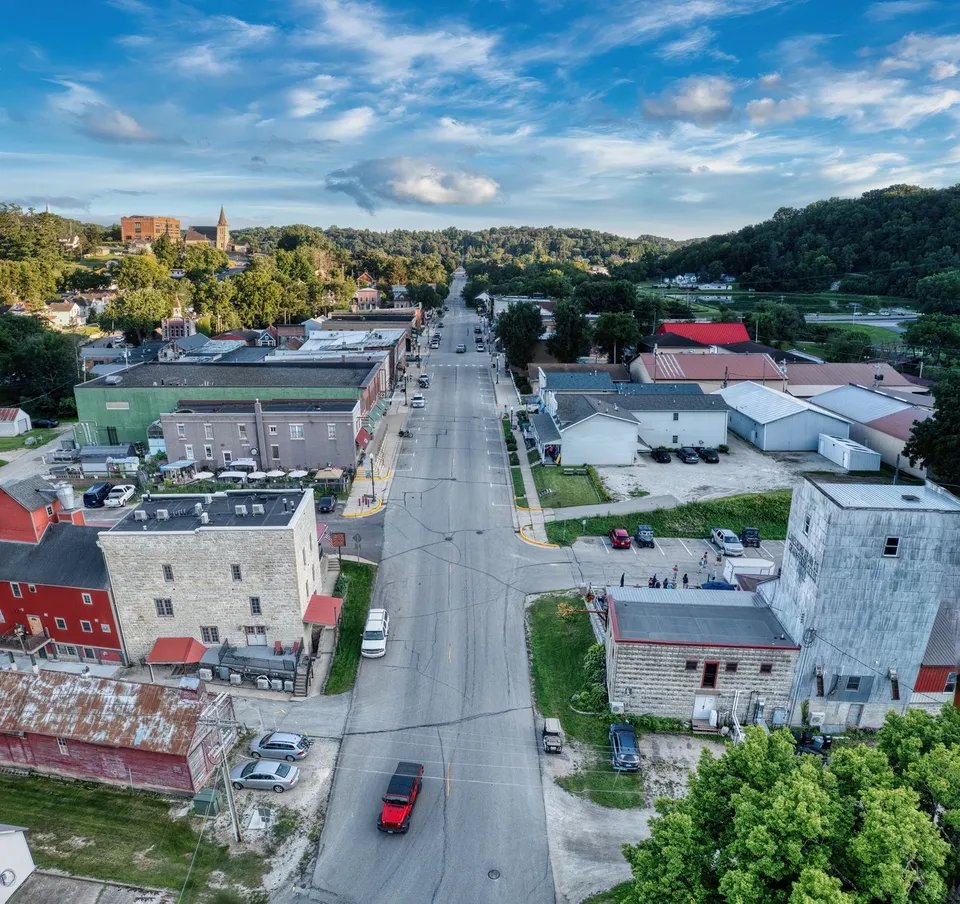
In many Minnesota workplaces, the hardest part of a job offer is not the wage line. It is the schedule line. A job can be a solid match on skills and pay and still fail the practical test if the worker cannot get there, cannot stay through the shift, or cannot line up care and transportation around the start time. In Itasca County, DEED reports that 82.8% of resident workers worked in their county of residence in the 2020–2024 ACS period, compared with 68.5% statewide, which is a reminder that local work and local life often overlap more tightly in Greater Minnesota than a city-only hiring conversation assumes .
That same Itasca profile also shows why transit deserves a place in hiring conversations. Arrowhead Transit’s published Itasca County information includes Grand Rapids connections with communities such as Deer River, Cohasset, Hill City and east Itasca, but some listed inbound trips reach Grand Rapids around 8:45 or 9 a.m., with return departures around 2:20 or 2:40 p.m. If a production shift starts at 6 a.m., a hospitality close runs late, or a healthcare-support role includes split coverage, the question is not whether transportation exists in a general sense. The question is whether the actual route, stop, day and return trip match the actual shift.
The real question is whether the workday is buildable
Employers often describe a position in terms of tasks: stocking shelves, running a press, answering phones, caring for patients, maintaining equipment or supporting a crew. Applicants, meanwhile, are often trying to answer a different question: can I do this job with the hours, distance and home responsibilities I have now? A useful job description should answer both.
That matters across industries. A manufacturer may need a machine operator who can arrive before the first run starts. A hospital may need a unit clerk or nursing assistant who can remain on site through the whole shift. A logistics employer may need someone who can report to a dock before dawn. An office may offer more flexibility, but only if the employer’s systems, supervision and remote-work rules actually permit it. The work itself, not the title, determines the access test.
DEED’s 2024 Job Vacancy Survey gives another reason to make the schedule visible up front. The survey found that 44% of openings required at least a year of experience and 49% required a certificate or license, and it reported a statewide median offered wage of $20.67 per hour across surveyed vacancies. Those are not live offers, and they do not describe every occupation. But they show that employers are already screening for more than enthusiasm. If a job also has a tight start time, an inflexible site or an unusually long commute, the posting should say so clearly instead of letting the applicant discover it late in the process .
Why child care, broadband and housing belong in the same conversation
A job becomes possible when the rest of the day can support it. Minnesota’s child care support system is part of that picture, but it is not a magic fix. DEED’s child care grant announcements said 25 awards totaling about $6.1 million were expected to expand statewide capacity by 1,400 slots, with most of the announced funding outside the seven-county metro. Those expected slots are not the same as an open seat for a specific shift, and they do not guarantee coverage at the exact hours a worker needs .
Remote work has a similar limit. The 2020–2024 ACS estimated that 91.6% of Minnesota households had a broadband subscription, but a subscription does not prove a reliable connection, a quiet workspace or employer approval to work from home. It also does not turn a patient-care, machine-operation, field-construction or hospitality job into a remote one. Broadband is a supporting fact, not a hiring promise .
Housing sits in the middle of the same equation. Statewide rent and home-value medians describe broad conditions, not a specific available unit or a budget that works for every household. In a place like Grand Rapids, Brainerd, or a smaller community in northeast or northwest Minnesota, the practical question is whether the wage, commute and household schedule fit together after deposits, mileage and child care are counted. That is a worker question and an employer question alike.
What employers can do differently
A clearer posting does not need to be longer; it needs to be more concrete. Employers can help candidates decide faster by stating:
- the actual worksite or whether the role is truly remote or hybrid;
- the start and end times, including split shifts, overtime expectations and weekend rotation;
- whether the worker travels between sites or covers more than one location;
- whether reliable transit, a driver’s license or a vehicle is essential;
- what training happens on day one and what training happens later.
That level of detail is not about making the job sound harder. It is about preventing avoidable mismatch. A worker who can confidently arrange child care, transit or a household ride can often stay longer and start better than someone who learns the real schedule after accepting the offer.
What applicants should ask before saying yes
Applicants can use the same test from the other side of the table. Before accepting, ask:
- What time do I really need to arrive?
- Is the schedule fixed, rotating or seasonal?
- If I work late or am asked to stay over, what is the backup plan?
- Does training happen at the main site or somewhere else?
- If the role is remote, what systems and expectations come with that?
Those questions are not signs of doubt. They are signs that the applicant is treating the job as a whole day, not a single paycheck.
That is especially important in Greater Minnesota, where regional patterns differ. A county with strong local attachment to work can still have gaps in transit timing, child care openings or winter travel. A job that looks simple on paper may require coordination with a spouse’s shift, a relative’s ride, a school bus schedule or a provider’s hours. In that setting, the best hire is often the person who sees the full picture early.
If you are an employer, make the worksite, schedule and coverage needs plain. If you are a job seeker, compare the shift against your real transportation and care plan before you commit. For a local conversation about duties, schedule and hiring needs, call Express or email grandrapidsmn@expresspros.com; applicants can also send a resume to apply@expressprosmn.com.